Delivery vs. the Drive: A Clear-Eyed Look at What Online Pharmacy Services Actually Cost Canadians
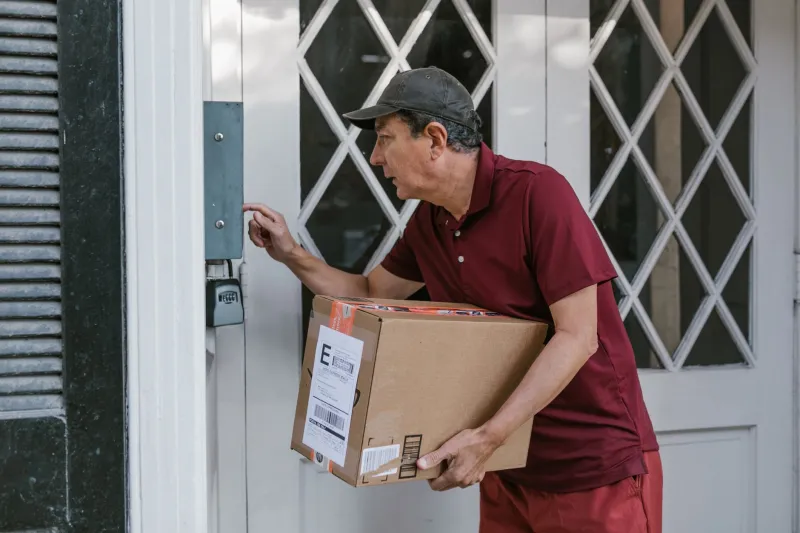
Convenience has always carried a price. The question worth asking is whether that price is reasonable—and whether what you are paying for is genuinely saving you something in return. For the growing number of Canadians who fill their prescriptions through online pharmacies, this calculation involves more variables than most people stop to consider. Shipping fees are visible. Consultation costs are disclosed upfront. But the full financial and practical picture is considerably more layered than any single line item reveals.
This analysis examines what online pharmacy delivery truly costs across different prescription types and Canadian provinces, and compares that against the real cost of driving to and waiting at a traditional pharmacy. The goal is not to advocate for one model over the other, but to give you the information needed to make a genuinely informed decision.
The Visible Costs: What You See Before You Check Out
Online pharmacy services in Canada typically involve three categories of explicit cost:
1. Medication price: In many cases, online pharmacies are able to offer competitive or lower prices on prescription medications compared to their brick-and-mortar counterparts, particularly for maintenance medications taken on a recurring basis. This is especially relevant for brand-name drugs, where pricing can vary substantially between dispensers.
2. Shipping fees: Domestic shipping costs for pharmacy delivery in Canada generally range from zero (on orders meeting a minimum threshold or with subscription services) to approximately $10–$15 for standard shipping. Expedited or overnight delivery, where available, can add $20–$30 or more. These fees vary by provider and province.
3. Consultation fees: Some online pharmacy platforms charge a fee for the pharmacist consultation required to process a new prescription or renewal. These fees, where applicable, typically range from $15 to $40, though many services include consultation at no additional charge as part of their standard offering.
On a surface-level comparison for a typical 90-day supply of a generic maintenance medication—say, a commonly prescribed antihypertensive—the total cost through an online pharmacy with standard shipping might be comparable to or marginally higher than the equivalent purchase at a local chain pharmacy, once shipping is factored in.
But stopping the analysis there misses a significant portion of the equation.
The Hidden Costs of In-Store Pickup
Traditional pharmacy visits carry costs that are rarely itemised because they are absorbed as part of daily life rather than charged on a receipt. When you account for them honestly, the comparison shifts.
Transportation costs: Whether you drive, take transit, or use a rideshare service, getting to a pharmacy costs money. For Canadians living in suburban or rural areas, a round trip to the pharmacy may involve 20–40 kilometres of driving. At the Canada Revenue Agency's current automobile expense rate of $0.70 per kilometre for the first 5,000 km, a modest 30-kilometre round trip represents a $21 cost that never appears on your pharmacy receipt.
Wait time: Average pharmacy wait times in Canada range from 15 to 45 minutes for a filled prescription, with longer waits common during peak periods or for complex prescriptions. If your time carries any economic value—whether you are billing professional hours, managing childcare, or simply allocating limited personal time—this waiting period has a real cost.
Opportunity cost of unplanned trips: Many Canadians report making emergency pharmacy runs when a prescription runs out unexpectedly. These unplanned trips are disproportionately disruptive and frequently result in partial fills or delays that compound the inconvenience.
Parking: In urban centres across Toronto, Vancouver, Calgary, and Ottawa, pharmacy parking can cost $3–$10 per visit, a figure that adds meaningfully to the annual cost of in-person pharmacy use.
When Delivery Saves Money—and When It Doesn't
The economics of online pharmacy delivery are not uniform. They depend heavily on the type of medication, your location, and how you structure your orders.
Delivery tends to be the better financial choice when:
- You are filling a 90-day supply of a maintenance medication and can meet a free shipping minimum.
- You live in a rural or remote area where the nearest pharmacy requires significant travel.
- You are managing multiple chronic conditions and would otherwise make frequent individual trips.
- Your online pharmacy offers a subscription or auto-refill service that waives shipping fees and locks in consistent pricing.
- You are comparing brand-name medication prices, where online platforms sometimes offer more competitive rates than retail chains.
Traditional in-store pickup may be more economical when:
- You need a short-course antibiotic or one-time prescription that does not justify shipping costs.
- Your provincial drug benefit plan is only accepted at specific physical locations.
- You require same-day dispensing for an acute condition and standard shipping timelines are not viable.
- Your local pharmacy is within walking distance and no transportation costs apply.
A Province-by-Province Consideration
Pharmacy pricing and coverage structures differ across Canada in ways that affect this calculation directly. In provinces with public drug benefit programmes—such as Ontario's ODB, British Columbia's Fair PharmaCare, or Alberta's Seniors' Drug Benefit—coverage eligibility and co-payment structures may differ between online and in-person dispensers. Before transitioning to an online pharmacy for covered medications, it is advisable to confirm with the provider that your provincial benefit plan is accepted and that your co-payment structure will remain unchanged.
In provinces where pharmacists can bill for clinical services—including minor ailment assessments or medication reviews—the question of whether these services are billable through an online consultation platform is also worth verifying, as billing frameworks continue to evolve.
Maximising Value With Online Pharmacy Services
For Canadians who determine that online pharmacy delivery suits their needs, a few practical strategies can help reduce costs further:
- Consolidate your prescriptions onto a single 90-day supply cycle and order everything simultaneously to meet free-shipping thresholds.
- Enrol in auto-refill programmes where available, which typically include waived shipping fees and eliminate the risk of running out unexpectedly.
- Request a medication review during your online consultation—this adds no cost in most cases and may identify generic alternatives or combination therapies that reduce your total prescription spend.
- Compare the medication price itself, not just the shipping fee. In some cases, the savings on the drug itself more than offset the cost of delivery.
Convenience is a legitimate healthcare consideration, not a luxury. When a prescription arrives reliably at your door without disruption to your schedule, the likelihood that you will take it consistently—and benefit from it fully—increases. That adherence benefit carries its own form of economic value, one that rarely appears in a cost comparison but matters enormously to long-term health outcomes.
The decision between online delivery and in-store pickup is not one-size-fits-all. But approached with complete information, it is one that most Canadians can make confidently.